
AI Visibility
The Homepage Test Every Founder Should Run
A quick, repeatable way to score your homepage the way an AI reads it.
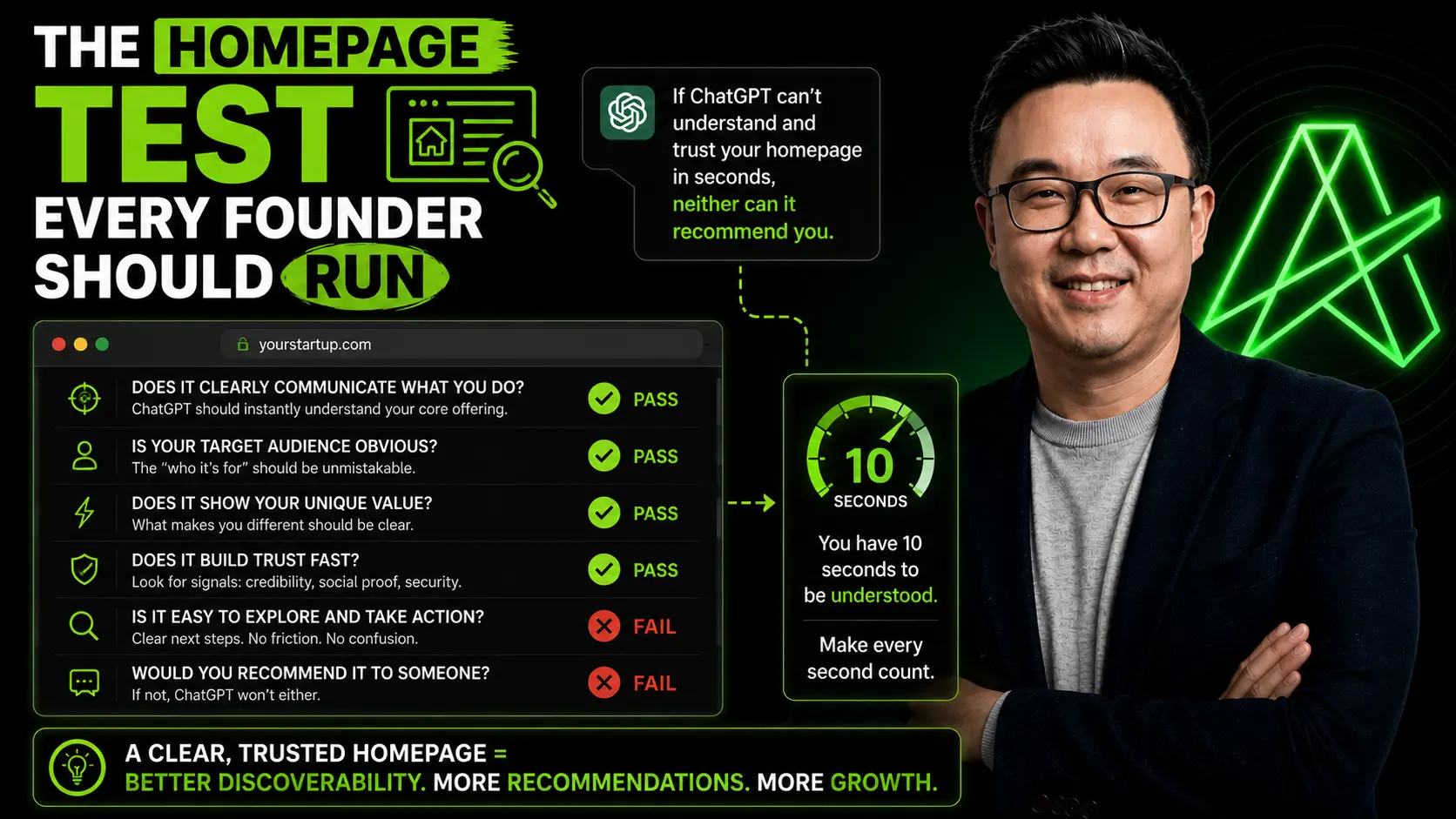
Score three checks out of six and see your homepage the way an AI reads it.
In this article (4 sections)
Quick answer
This is a quick, repeatable test you can run on any homepage. Open it in a private window and read it for thirty seconds, the way an AI would. Then score three things with the Homepage Visibility Scorecard: who it is for, what it does, and why to trust it. Give each a score from zero to two, for a total out of six. Six means an AI can place and recommend you. Below four means you have clear gaps to fix today. It matters because AI engines sample rather than read, and studies find around 44 percent of AI citations come from the first third of a page, so your first screen carries the weight.
Why run a homepage test
Your homepage is most of what an AI knows about you. It does not study the page the way a careful reader would. It samples the first screen, forms a fast impression, and moves on.
That is not a guess. AI engines work under a budget and lift short passages rather than reading top to bottom, and research finds that roughly 44 percent of the passages they cite come from the first third of a page. Whatever is above the fold is doing most of the work.
A quick test shows you what the AI sees, before it costs you a recommendation. This is the practical companion to the thirty-second test: same idea, turned into a score you can track.
The Homepage Visibility Scorecard
Open your homepage in a private window. Read it for thirty seconds, then close the tab and score three checks from memory, zero to two each.
Check 1: Who is it for
Two points if the buyer is named clearly. One point if it is only implied. Zero if anyone could be the buyer. "For founders" or "for marketing teams" earns the full two; "for ambitious teams everywhere" earns zero.
Check 2: What does it do
Two points if the category is stated in plain words. One point if you have to infer it. Zero if it is a slogan. "An AI visibility audit platform" scores two; "reimagine your workflow" scores zero.
Check 3: Why trust it
Two points for named proof with numbers. One point for vague proof. Zero for none. "Used by 500 founders, average +22 points" beats "loved by teams everywhere," which beats an empty page.
Read your score
Add the three checks for a total out of six. Your total tells you whether you are fighting to be seen at all or polishing to be picked more often.
Five or six means an AI can place and recommend you. Three or four is partial, with clear gaps. Two or below means you are mostly invisible, and an AI cannot confidently say what you are or who you serve.
Fix and retest
Fix the lowest check first, not the easiest one. A single weak signal is usually what keeps an AI from placing you, so that is where one change buys the most.
Small changes move the score fast. Rewriting a vague first line, naming your buyer, or adding one named proof point can lift you a full band in an afternoon. For the full method, read the complete AI Visibility Guide, or check your category signals.
- ~44% of AI citations from the first third of content — ALM Corp (2025)
- Content structure & front-loading lift AI citations — Machine Relations GEO research (2026)
- What makes a page quotable for AI — Position Digital AI SEO statistics (2026)
- The companion 30-second test — AudFlo
- AudFlo methodology: the four pillars and 32 checks
Key takeaways
- →Score your homepage the way an AI reads it, in about 30 seconds.
- →Check three things: who it is for, what it does, and why to trust it.
- →Score each 0–2, for a total out of six.
- →Around 44% of AI citations come from the first third of a page, so the first screen carries the weight.
- →Below four out of six means clear gaps to fix today.
- →Fix the lowest check first, then re-score.
Common questions
FAQ.
How do I run the homepage test?+
What three things should my page answer?+
Why does the first screen matter so much?+
What if I fail one of the three?+
Should I test mobile and desktop?+
How often should I run it?+
Continue reading
More from the blog.
AI Visibility
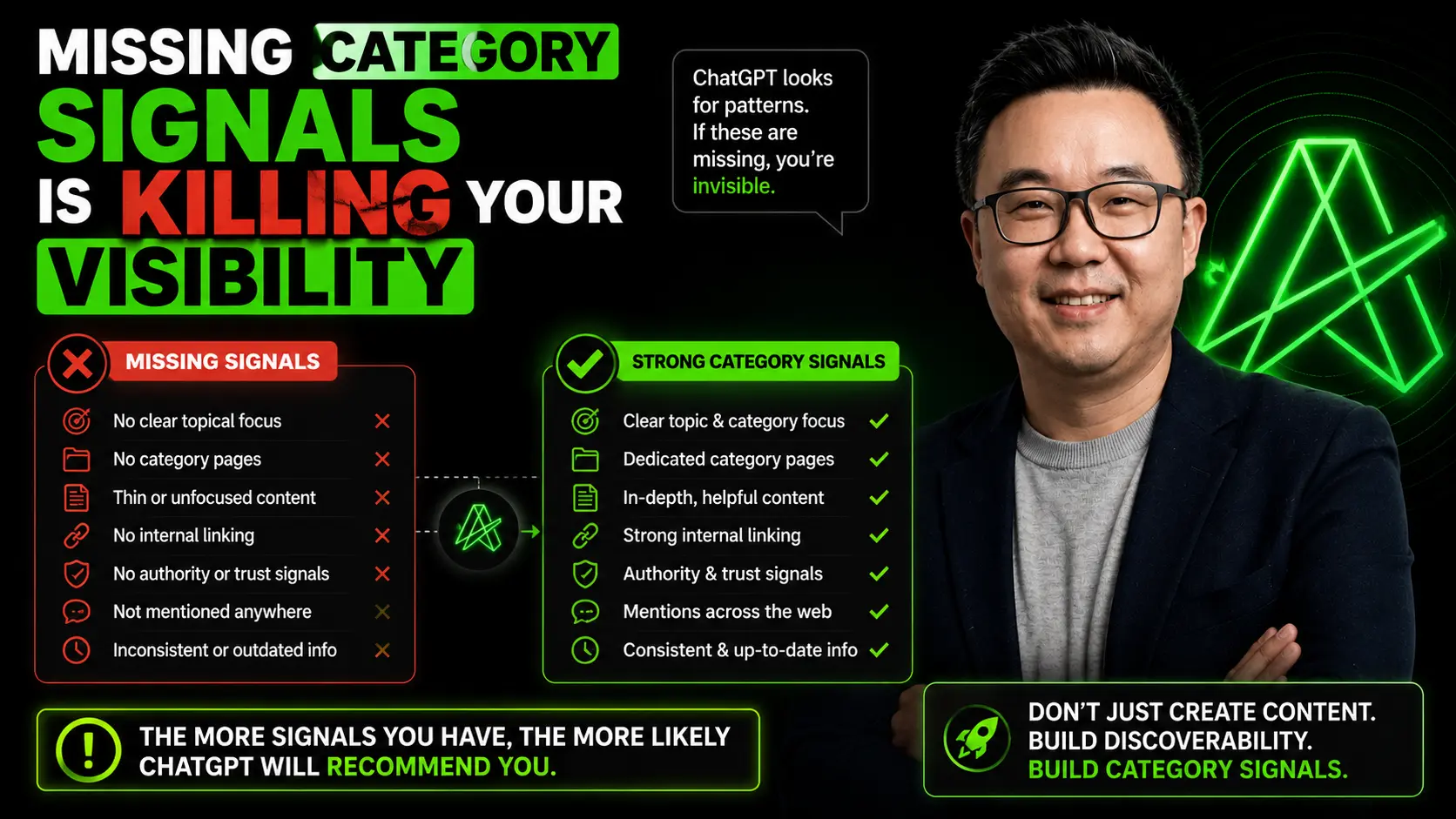
Missing Category Signals Is Killing Your Visibility
If an AI cannot tell what category you are in, it cannot recommend you. Here is how to find and fix the gap.
AI Visibility
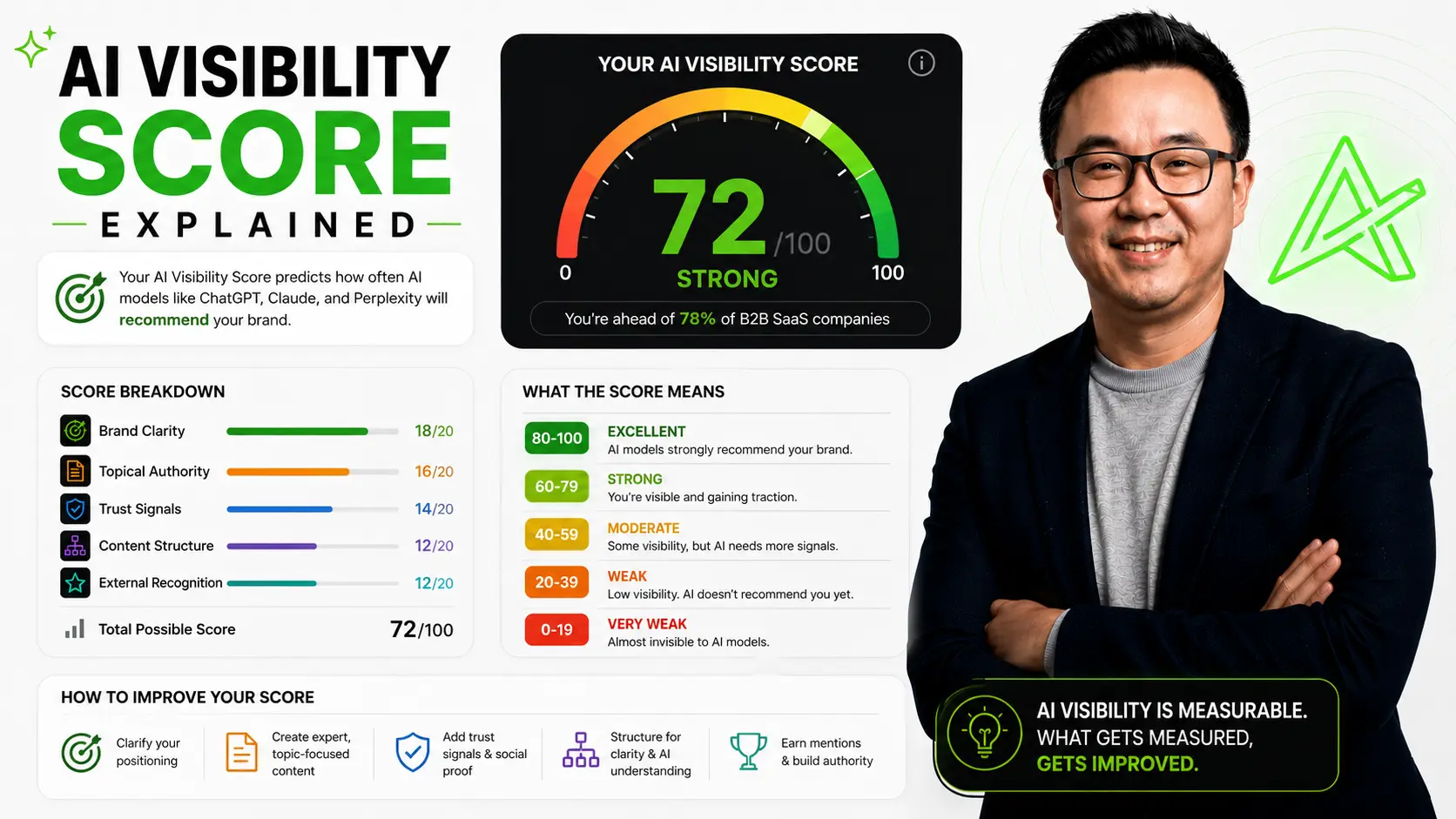
AI Visibility Score Explained
What the number means, how it is built from four weighted pillars, and how to move it up over time.
See why AI recommends competitors instead of you.
AudFlo is an AI Visibility Audit Platform. Run a free scan to get your AI Visibility Score and the exact fixes that help you get recommended.
New here? Read the complete AI Visibility Guide for founders or browse every article on the blog.
About the author
Matt Lin
Architect by training. Property developer by profession. Tech entrepreneur by passion.
Founder of AudFlo, an AI Visibility Audit Platform that helps founders understand why ChatGPT recommends competitors instead of them.